Back to Article
Spatial Mismatches between Cyclone Exposure and Food System Impacts in Vanuatu: Integrating Topographic, Agro-Ecological, and Infrastructure Mediators for Resilience Planning
Universal Journal of Food Security
| Vol 3, Issue 1
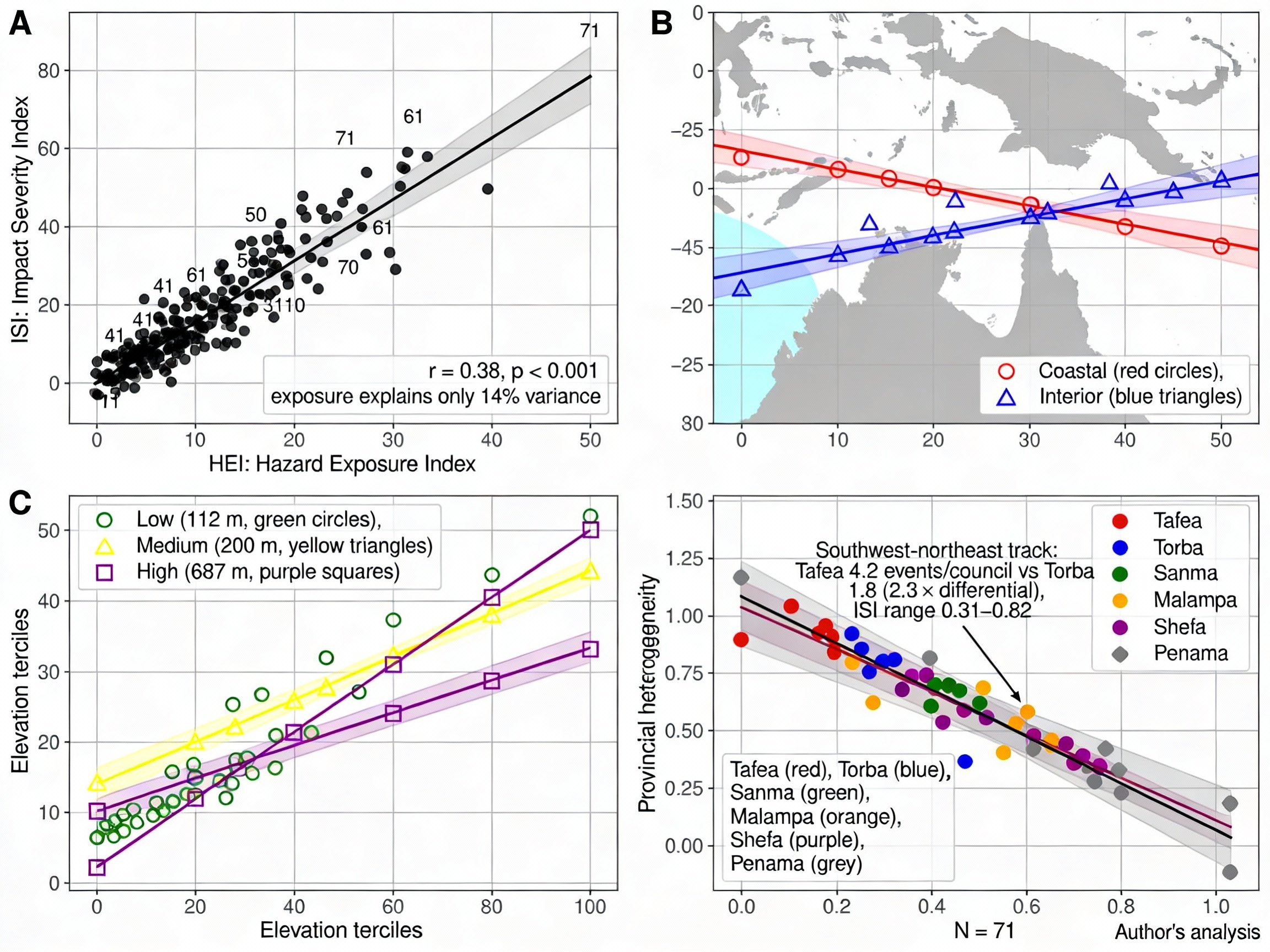
Figure 4
Figure 4.
Cyclone exposure is a poor and spatially inconsistent predictor of food system impact severity across Vanuatu. The weak overall HEI–ISI relationship (R² = 0.14) masks systematic provincial heterogeneity: Tafea experiences 4.2 events per area council yet exhibits wide ISI variance, while Torba's low-frequency exposure (1.8 events) does not preclude severe impacts in infrastructure-deficient councils — demonstrating that coastal position, elevation, and distribution capacity collectively override raw hazard exposure as determinants of food security outcomes.