Back to Article
Spatial Mismatches between Cyclone Exposure and Food System Impacts in Vanuatu: Integrating Topographic, Agro-Ecological, and Infrastructure Mediators for Resilience Planning
Universal Journal of Food Security
| Vol 3, Issue 1
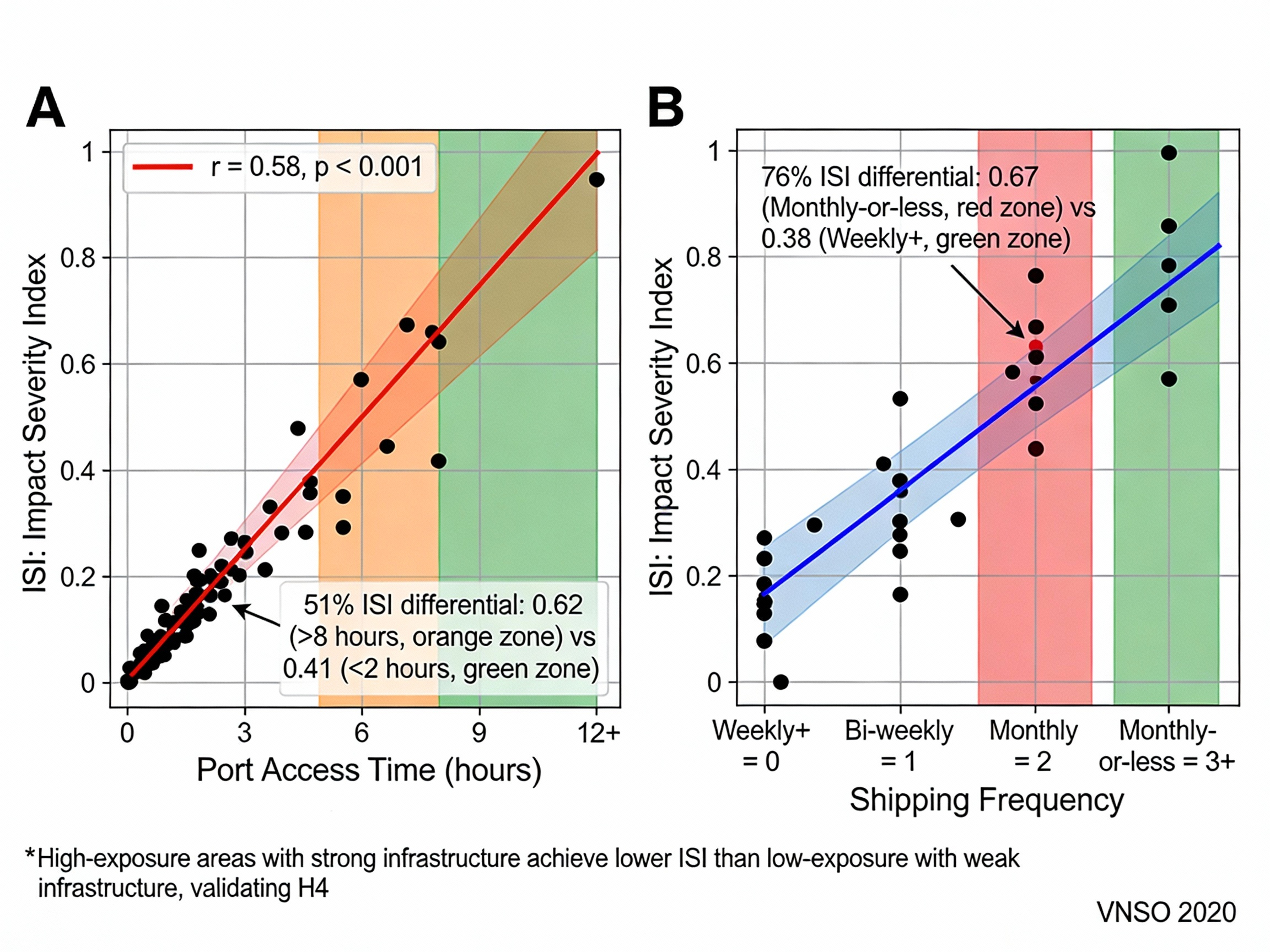
Figure 6
Figure 6.
Maritime connectivity — not cyclone exposure — drives post-disaster food security outcomes across Vanuatu's area councils. Port access time (r = 0.58, p < 0.001) and inter-island shipping frequency independently predict impact severity, generating a 51% and 76% differential in ISI respectively between well-connected and isolated councils — a stronger signal than cyclone exposure alone (r = 0.38) — confirming that distribution network capacity is the dominant mediator of food security recovery trajectories in archipelago SIDS.