
Abstract
This study utilized a qualitative approach to completely ascertain Junior High School Social Studies teachers’ knowledge, strategies and tools used in formative assessment. This study employed a qualitative approach. The study, which was based on a qualitative paradigm, used a phenomenological research methodology to investigate the lived experience and acuity of formative assessment procedures. A selected sample of nine (9) Junior High School Social Studies teachers was chosen based on their academic credentials and professional teaching experience. A focus group discussion was employed to gather data, which was then thematically examined in light of the research questions. The results showed that the participants had a robust knowledge and were adept at using formative assessment strategies and tools in Social Studies lesson. It was recommended that pre-service and in-service teachers should be allowed to use formative assessment techniques sparingly. The National Teaching Council seminars ought to focus on how Junior High School Social Studies teachers can effectively use formative assessment techniques to enhance instruction.
1. Introduction
It has long been believed that education is a powerful force for change that molds and prepares a person for life. In order to address social and economic issues including unemployment, poverty, and inequality, sub-Saharan African nations, particularly Ghana, should invest in education to guarantee that everyone has equitable access to high-quality education (Mauti et al., 2023) [1]. Education remains a global concern today. The majority of professionals from different educational institutions throughout the world have been working continuously to enhance education in order to shape and prepare students to address the problems and challenges that society faces. According to this viewpoint, education has undergone substantial transformation in the twenty-first century. In order for students and their teachers to meet the required educational content standards, new pedagogies of teaching and learning are being deployed while the archaic methods have been given less emphasis. Education is seen as the emancipation that allows both men and women to confront reality critically and learn how to change the world (Freire, 1993; Pacho, 2013) [2, 3]. This highlights the value of education in the modern world and the necessity of progress and change.
In order to attain information in this changing world, Freire (1993) [2] promotes progressive education and problem-solving techniques that place an emphasis on exploration. The expanding body of literature demonstrates that the field of education has not stayed stable and unchanging, but has occasionally undergone a numerous change (George, 2020) [4]. Innovation, research, societal shifts, and hardships that have had a variety of effects on human life have all contributed to the changes. Teachers are increasingly demanding more balanced education assessment systems that provide valuable data for a range of educational objectives, from how to mold on-going classroom instruction to state-level accountability decisions (Pellegrino, Chudowsky, & Glaser, 2001; Wilson & Draney, 2004; Pellegrino, 2006; Darling-Hammond & Pecheone, 2010) [5, 6, 7, 8]. Additionally, they are advocating for coherent systems that would collect pertinent data about students' learning over time and link assessments at all levels (from classroom to state) with the same learning objectives and conceptions of what learning is (Pellegrino, 2006; Herman, 2010) [7, 9].
In the educational system, assessment is a crucial procedure for monitoring and promoting learning. In addition to mediating interactions between teachers and students in the classroom, assessment is essential to teaching and learning activities in schools (Amua-Sekyi, 2016) [10]. The Latin verb "assidere," which means "to sit beside," is where the term "assessment" originates. According to Swaffield (2011) [11], the picture of a person sitting next to a student presents assessment as a tool for learning rather as a performance evaluation. Many teachers' techniques naturally incorporate the "sitting beside" method of assessment. Teachers pay close attention to what students say, write, and do in order to enhance their learning since these activities reveal how students think about and comprehend the material. Teachers are better able to determine the optimal course of action and develop strategies for directing future learning when they are aware of the learning states of their students (Swaffield, 2011) [11].
All of the activities that teachers and learners engage in to gather data that may be utilized to modify instruction is referred to as assessment. This involves the observation and evaluation of student work by teachers, including assignments, tests, essays, reports, practical procedures, and class discussions. Sampling what a student may or may not know is the focus of all of these. Additionally, assessment is used to "satisfy public expectations as to standards and accountability, and to select, control, or motivate students" (Biggs, 2003) [12]. When teachers are wary of their students' learning states, they are better equipped to decide on the best course of action and create methods for guiding future learning (Swaffield, 2011) [11].
Assessment is the term used to describe all of the activities that teachers and students participate in to collect information that could be used to modify classroom instruction. This include teachers observing and assessing student work, including assignments, tests, essays, reports, practical procedures, and class debates. The goal of all of them is to sample what a student may or may not know. This is due to the fact that formative assessment in particular and assessment in general, teaching, and learning are interchangeable (Young & Bush, 2009) [13]. The creation of formative assessment procedures that support and reflect student learning has drawn increasing attention from teachers, policy makers, and educational researchers over the past ten years (Bell & Cowie, 2001; Torrance, 2001; Williams, 2011) [14, 15, 16]. During a teaching unit, formative assessment takes place with the goal of using the data collected to modify subsequent learning scenarios (Earl, 2003) [17]. Consequently, formative assessment is distinguished by the fact that its main purpose is to aid or improve learning rather than simply attributing a grade (Marshall & Drummond, 2006) [18]. The idea of linking assessment to instruction and learning is not new, yet teaching and assessment have been viewed as separate entities for a very long time (Richard & Godbout, 2000) [19].
The goal of the of Social Studies is to provide students the knowledge, attitudes, values, and abilities they need to become responsible, educated, creative, and engaged citizens. Social Studies tackles the issues that Ghanaian society faces and that pose a threat to its survival. It accomplishes this by giving the student the chance to use ideas, theories, and generalizations from a range of pertinent fields in order to examine, research, and develop suitable answers to both individual and societal issues. It gives students the chance to learn more about the globe and their immediate surroundings. As a result, social studies places a special emphasis on fostering students' critical thinking, curiosity, problem-solving abilities, and leadership and personal development skills. Additionally, it aims to improve digital literacy, cultural identity, global citizenship, creativity and innovation, and communication and teamwork (NaCCA, 2020) [20]. In order to help students complete or achieve the core competencies of a specific Social Studies lesson, Social Studies teachers must evaluate students' academic ability or track their academic development in order to modify or revamp the teaching techniques and strategies used in the lesson to fit students' interests and preferences.
In the Social Studies lesson, this highlights the importance of formative assessment. As an integrated instructional tool, formative assessment requires specialized knowledge and abilities from teachers. Among other things, Social Studies teachers should be knowledgeable about how students acquire and improve skills and comprehension of concepts and ideas (Govender, 2019) [21]. On the other hand, the investigator's observation and monitoring of Social Studies lessons showed that students' poor performance in the subject is caused by most Social Studies teachers' improper use of formative assessment. Studies by Adam, Bekoe, and Poatob (2019) [22], Govender (2019) [4], and Ochour, Opoku-Afriyie, and Eshun (2022) [23] provide examples of these findings and explain why Social Studies teachers underuse formative assessment. Therefore, the goal of the current study is to ascertain the knowledge, strategies, and tools employed in formative assessment practices used by Social Studies teachers. The purpose of the study was to ascertain Junior High School Social Studies teachers’ knowledge, strategies, and tools used in formative assessment in the Assin Foso Municipality. The following research questions will guide the study: (1) What is Social Studies teachers’ level of knowledge of formative assessment? (2) What are the strategies Social Studies teachers use in formative assessment? (3). What are the tools Social Studies teachers use in formative assessment?
2. Literature review
2.1. Conceptual review
By delving deeply into the definition of formative assessment from a variety of authors, as well as the strategies and tools employed in formative assessment, the examination of related literature promoted differing opinions regarding the goals of the current study.
Formative assessment, according to Black and Wiliam (1998a) [24], is "all those activities undertaken by teachers and/or by their students (that) provide information to be used as feedback to modify the teaching and learning activities in which they are engaged ”.Formative assessment is the process of seeking and interpreting evidence for use by learners and their teachers to decide where the learners are in their learning, where they need to go, and how best to get there," according to the UK's Assessment Reform Group (2002) [25]. Formative assessment, according to the Council of Chief State School Officers (CCSSO) (2008) [26], is a technique that teachers and students employ throughout instruction to provide feedback to modify current teaching and learning in order to improve students' accomplishment of targeted instructional outcomes. In order to help students’, improve their attainment of the planned instructional outcomes, teachers and students utilize formative assessment, which is a method that gives feedback to modify current teaching and learning (Heritage, 2010; Heritage, 2011) [27, 28].
In addition, formative assessment is an ongoing, dynamic, and progressive process that elicits verbal and non-verbal responses from learners about the progress of their learning (Biggs, 2003; Pryor & Crossouard, 2008; Buck & Trauth-Nare, 2009) [12, 29, 30]. Formative assessment is the use of assessment by teachers as a regular tool, according to Leahy and Wiliam (2012) [31]. This suggests that formative assessment should be prioritized in order to elevate learning quality, as supported by a variety of research. According to Chen et al. (2020) [32], formative evaluation gives students the chance to become self-regulated learners. According to Kuo et al. (2023) [33], students' capacity to learn improves in three stages: self-reflection, performance or volitional control, and forward-thinking. As a definitive method, each of these stages works in concert with formative assessment. Formative assessment data is used to determine students' academic achievement and to help teachers modify levels to help students achieve the targeted learning objectives or core competencies (Heritage, 2007) [34]. Students actively participate in formative assessment with their teachers, discussing learning objectives and comprehending how their learning is developing, what needs to be done next, and how to apply those objectives in both teaching and learning.
According to Heritage (2007) [34], formative assessment entails a range of evidence-gathering techniques that fall into three (3) general categories: curriculum-embedded assessment, planned-for-interaction assessment, and on-the-fly assessment. On-the-fly assessment. On-the-fly assessment occurs spontaneously during the course of a lesson. For example, a teacher listening to group discussions hears students expressing misconceptions about the science concept she has been teaching. The teacher then changes the direction of her lesson to provide a quick “pop-up” lesson. The pop-up lesson enables the teacher to clear up the misconceptions before proceeding with her planned instructional sequence. Planned-for interaction. In planned-for interaction, teachers decide beforehand how they will elicit students’ thinking during the course of instruction. For example, teachers plan or write down the questions they will ask learners during the course of the lesson in order to enable students to explore ideas, and these questions can elicit valuable assessment information. Curriculum-embedded assessments. There are two kinds of curriculum-embedded assessments: those that teachers and curriculum developers embed in the ongoing curriculum to solicit feedback at key points in a learning sequence, and those that are part of ongoing classroom activities. For instance, learners’ draws the vegetation map of Ghana during a Social Studies lesson. According to Heritage (2007) [34], formative assessment needs four (4) key components in order to be effective in the teaching process. These components include (a). gap identification (b). feedback (c). learning progression and student interaction (d). learning progression.
- Identifying the gap. The overarching priority of formative assessment subsumes (a). identifying or monitoring learners ’academic progression (b), to aid the teacher in modifying and varying teaching techniques and strategies employed in the lesson. This illuminates that, for formative assessment to attain its goal, there is a need for the teacher to support learners in the instructional process. This can be achieved by assisting learners to bridge the lacuna in their learning progression. For instance, teachers support learners to complete tasks assigned to them in the class. The teacher moves around to assist learners who find the assigned task very difficult.
- Feedback. Feedback is very pivotal in formative assessment. Teachers’ prompt response to learners’ and learners' verbal and non-verbal communication aids to ascertain learners’ academic progression or how they comprehend the strand or sub-strand in the instructional process, vis-à-vis informing teachers to bridge the gaps in their instructional process, which includes their instructional techniques, strategies, and mode of assessment.
- Student involvement. Subliming learners’ academic progression in formative assessment revolves around learners’ dominant involvement in the instructional process. Learners participate actively in the learning process through peer-learning, exploring their environment for information, and also taking responsibility for their own learning. These assist learners in developing self-regulation and enable them to adapt their learning strategies to meet their learning needs. Learners collaborate with their teachers to identify the criteria to attain success or accomplish the content standards.
- Learning progression. Learning progression serves as the yardstick to measure learners’ performance in and outside of the classroom. Learning progressions provide the big picture of what is to be learned, and they help teachers identify students’ current learning status on the continuum along which students are expected to progress. Students also need to have short-term goals, which are derived from the learning progression and described in terms of success criteria. Success criteria are the guide to learning while the student is engaged in the learning tasks. The success criteria provide the framework within which formative assessment takes place and make possible the interpretation of evidence.
2.2. Theoretical Review
Lev Vygotsky's (1962, 1978) [35] Socio-cultural constructivist learning theory serves as the foundation for this investigation. This learning approach emphasizes that students come from a variety of backgrounds in the classroom. This means that educators shouldn't assume that students are all the same or on par in terms of their academic ability. Fear and humiliation should not exist in the classroom; instead, improving cooperation and engagement should be the norm. According to Heritage (2010) [27], Vygotsky saw learning as a social process in which students work with more experienced people-teachers or peers-to construct cognitive structures that are still developing and unlikely to fully mature in isolation. When students receive assistance from their teachers or other coworkers, learning is improved. The Zone of Proximal Development concept sheds light on the gap between what students can and cannot accomplish without assistance. The gap between what a student can accomplish on their own and what they cannot accomplish on their own without assistance from a teacher or other competent person is known as the zone of proximal development. The teacher helps students’ complete tasks including class exercises, group projects, and project work within the Zone of Proximal Development. While students are in charge of their own education, there is a necessary collaboration between the teacher and the students. As the facilitator, the teacher uses a variety of teaching techniques, including fishbowl, think-pair-share, jig-saw, buzz group discussion, and inside-outside, to help students achieve the lesson's core competencies (Ndlovu, 2024) [36].
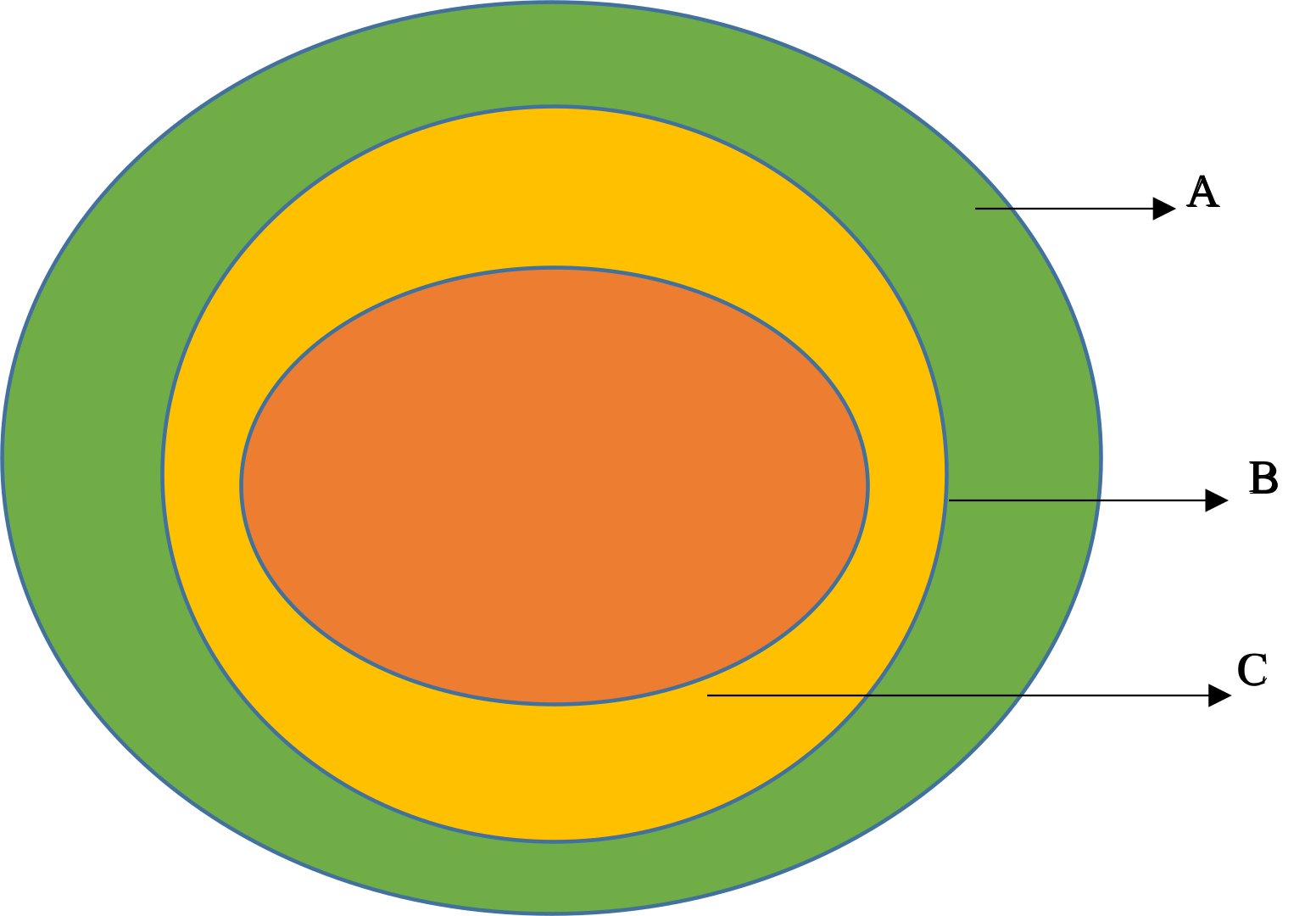
The Zone of Proximal Development is vividly understood in the above annotated diagram. The area where a student is unable to complete a task is represented by the sector designated "A." The part where a student completes a task with help from the teacher or their peers is represented by the sector labeled "B." The learner emphasizes collaborative learning and support, namely scaffolding and reciprocal learning, in this zone. This is the zone of proximal development. Lastly, the sector labeled ‘C’ represents the portion where learners are capable of performing a task on their own. Learners in this sector take initiative for their own learning.
2.3. Conceptual framework
This study's main objective is to determine Social Studies teachers’ knowledge, strategies, and tools used by Junior High School Social Studies teachers in formative assessment during instruction. This study listed a number of variables that affect how well formative assessment works in Social Studies instruction and learning. Formative assessment, according to Black and Williams (1998a) [24], is any activity that both the instructor and the students conduct in order to provide crucial information as feedback to change both the teacher's and the students' teaching and learning. This is consistent with Earl's (2003) [37] explanation that formative assessment is a continuous, simultaneous, on-going multitude process that is carried out every day through teacher-student contact and is integrated into the instructional process. In congruity, teachers modify their instructional techniques and strategies to improve student performance and the learning process. According to Black et al. (2003) [38], formative assessment is appropriate for both the assessment itself and the roles it plays in supporting students' learning and furnishing information that may be used to adapt instruction to better meet learning needs. According to this functional perspective, the learning method and the teacher's knowledge, strategies, and tools used to carry out pedagogical procedures are critical to the successful implementation of formative assessment (Webb & Jones, 2009) [39]. Five (5) major themes serve as justification for the use of formative assessment in teaching and learning, according to Black and William (2009) [40]. This includes:
- organizing productive class discussions and other educational activities that demonstrate student learning.
- quick feedback that assesses students' development
- developing and distributing learning indicators and success criteria
- encouraging students to take charge of their own learning;
- enabling students to serve as mutual teaching resources.
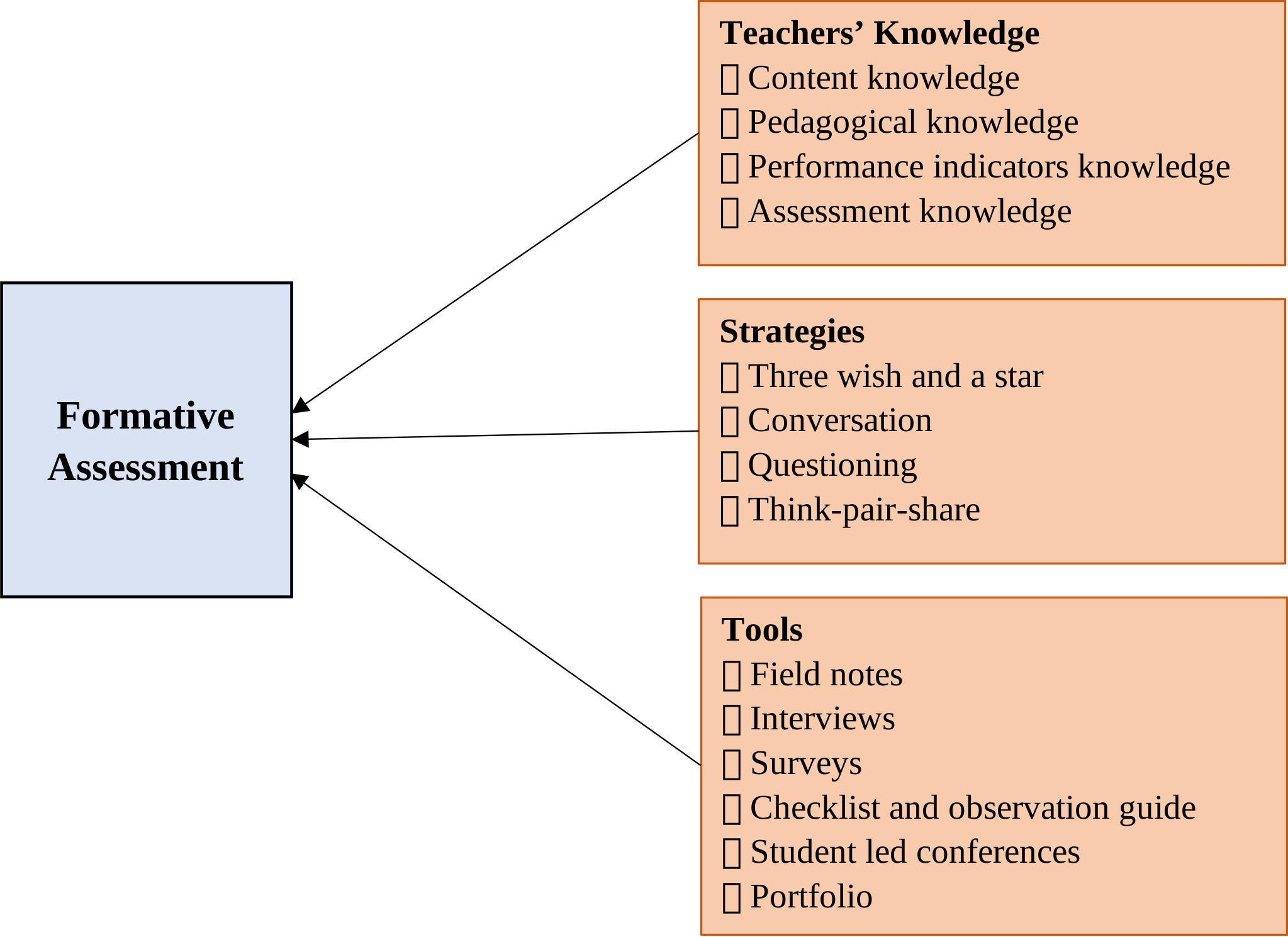
The study's conceptual framework, shown in Figure 2 below, suggests that a variety of factors are involved in the successful application of formative assessment in Social Studies. The knowledge, strategies, and tools that teachers employ to gather information in order to make well-informed decisions on formative assessment in Social Studies lesson comprise this diverse range of dimensions. In summary, the fountain that manipulates the aforementioned diverse aspects is formative assessment. Once more, the conceptual framework demonstrates how important teachers' expertise is to the effective use of formative assessment in Social Studies lessons. Content knowledge, pedagogical content knowledge, assessment knowledge, and performance indicator knowledge are some of these. Furthermore, the framework recommends that formative assessment methods such observation, dialogue, learning artifacts, and student self-evaluation be clarified. Additionally, field notes, checklists, observation guides, interviews, questionnaires, portfolios, rubric checklists, and student-led conferences are used as data collection techniques. Since formative assessment served as the foundation for the study, all of the single-headed arrows point to it. In conclusion, formative assessment in Social Studies lessons cannot be successful without these many components: (a) the teacher's knowledge; (b) strategies; and (c) tools used in formative assessment practices.
3. Materials and methods
3.1. Research approach
This study adopts a qualitative research paradigm grounded in phenomenological epistemology.
Participants subjective interpretation and intuitions are emphasized (Orange and Matere, 2023) [41].
3.2. Research Design
The study employed the qualitative research design. The phenomenological research design was used to address the research questions. The design examines the witty and lived experiences in relation to the Social Studies teachers' knowledge, strategies, and tools employed in formative assessment. Hossan et al. (2024) [42] posit that phenomenological research design postulates that individuals utilize a common framework to elaborate their experience. Analyzing participants’ perceptions, emotions, and beliefs determines the root of the issue or phenomenon they are studying.
3.3. Study Area
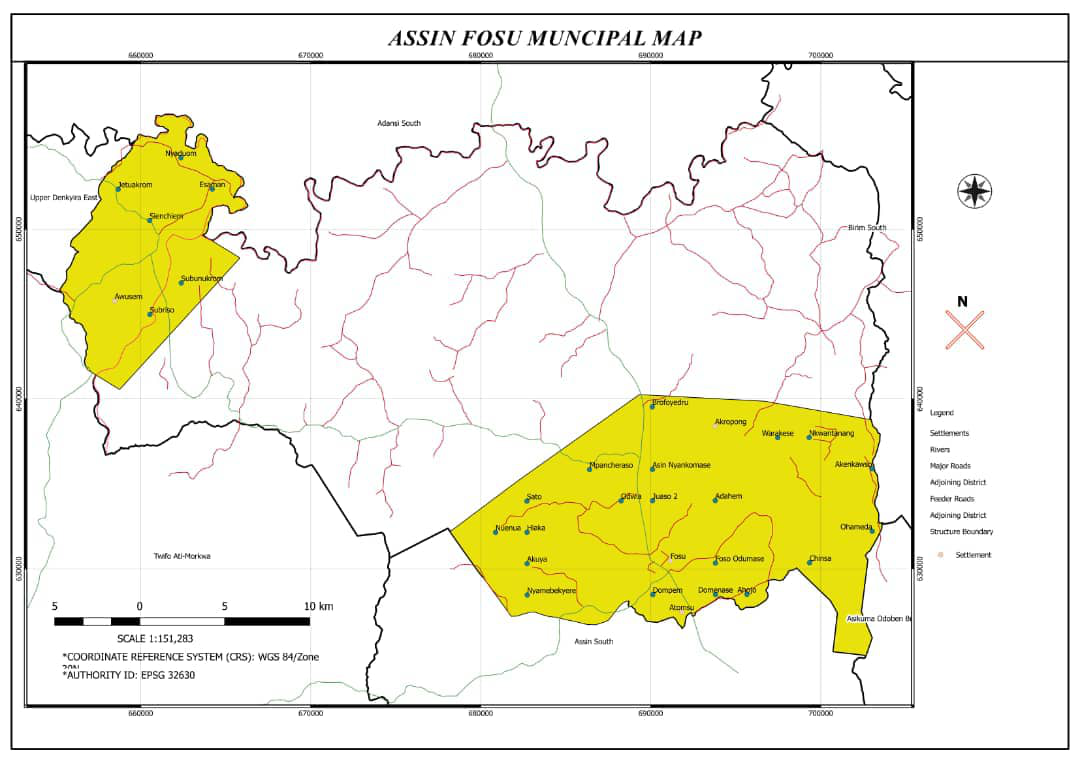
The Assin Foso Municipality in Ghana's Central Region served as the study's site. With its northern, eastern, and south-western lanes, Assin Foso plays a crucial role in connecting the Ashanti, Eastern, and Western regions. Situated in Ghana's semi-deciduous forest zone, the township features a valley environment with streams scattered throughout. Farming and trading are the residents' main socio-economic pursuits. The municipality was chosen for the study because it is an appropriate setting for investigating reflective teaching practices at the basic school level, with a mix of urban and peri-urban basic schools and a comparatively consistent population of experienced Social Studies teachers.
3.4. Participants and sampling
Nine (9) Social Studies teachers in 63 Junior High Schools (JHS) in the Assin Fosu Municipality constituted the population for the study. Non-probabilistic Sampling technique, specifically purposive sampling, was essential in selecting participants for the study. Two criteria, namely teaching experience and higher academic qualification, were the benchmarks for the selection of the participants. The participants were adjudged to be witty and have taught Social Studies long enough to offer insightful ideas to address the research problem.
3.5. Procedure and data collection
The investigator personally invited the participants to a serene ambience and administered the focus group discussion with the participants. The investigators ask and probe questions using a discussion guide while the participants calmly provide the requisite answers. Wong (2008) [43] posits that focus group discussion enables the investigator to ask participants specific questions about a topic under discussion.
3.6. Data analysis
Following transcription, a cross-case analysis method was used to examine the participants' focus group discussion responses. This method involved analyzing all of the participants' answers to a single question collectively. After that, common themes among the respondents were found, examined, and explained item by item. The investigator manually transcribed each respondent's audio recordings onto paper after replaying them as part of the study. In order to prevent misunderstandings regarding the sense or meaning of the information respondents provided, the investigator directly transcribed sentences and phrases. He went over each teacher's response once more and noted the main points. Each question's responses were categorized and examined in relation to key concerns.
4. Findings on teacher’s knowledge, strategies and tools used in formative assessment
The following sections below present the main outcomes garnered from the collection of data according to the research questions.
4.1 Social Studies Teachers' level of knowledge about formative assessment.
Findings from the focused group discussion divulged that Social Studies teachers display a robust and vivid comprehension of formative assessment. Participants accordingly delineated formative assessment as the continuous, ongoing process between the teacher and the learner whereby the teacher utilizes the information garnered during teaching to modify instruction and activities in order to improve learning processes and students’ outcomes. For instance, participants conceptualized formative assessment as a continuous, dynamic, and progressive process that elicits verbal and non-verbal data from teachers and learners about the progress of learning. In addition, the participants used heterogeneous expressions to define formative assessment; a frequent theme across all responses was accentuated to ameliorate teaching techniques and learners’ academic performance. This underscores the fact that formative assessment is meant to collate appropriate feedback and corrective action to streamline classroom instruction to attain the desired content standards of the lesson. Some of the responses were as follows……
formative assessment is a progressive process of evaluating learners’ academic performance during classroom instruction. In addition, formative assessment is an on-going process of garnering information about student learning to identify their strength and flaws to ameliorate learning. More, formative assessment is a process whereby the teacher ascertains learners’ understanding during teaching.
These findings align with Akyima and Oduro-Okyireh (2015) [44] both posit that teachers possess a high level of knowledge of formative assessment. Similarly, teachers' robust level of knowledge of formative assessment also guides them to plan their lessons, improve learning, and assist in identifying any lacuna in the teaching and learning process.
4.2. Strategies Social Studies teachers' use in formative assessment
Beyond teachers’ knowledge, the findings displayed that formative assessment is a continuous and ongoing process that occurs during teaching and learning. This assessment intends to gather adequate information to support future learning. Consequently, formative assessment is recognized for the fact that its main objective is to improve learning rather than assigning grades or placement to learners. For example, some participants reported 'three and a wish' is one of the strategies they used in formative assessment. Others highlighted that 'traffic light' is also another strategy they use in formative assessment. Based on the responses from the participants, it was uncovered that these strategies were occasionally employed by Social Studies teachers. Some of the strategies were questioning, think-pair-share, classroom discussion, observation, class exercise, homework, and learners' facial expressions. Some of the response teachers responded that…………
I use questioning as a pivotal strategy to examine learners’ comprehension in the lesson. In addition, another teacher revealed that, I use discussion to ascertain students’ progress in the lesson. Another respondent said that, I use think-pair-share to discover students understanding in Social Studies lesson.
As exemplified by Cambridge Assessment International Education (2017) [45], formative assessment strategies serve as a linchpin that augments teaching and learning in the classroom. This finding displays that these varied strategies ignite learners’ participation and their zeal to ensure progression in learning and teachers' instructional techniques.
4.3. Tools Social Studies teachers use in formative assessment
Undoubtedly, findings further uncovered that formative assessment ensures that learners' progression and teachers' capability to utilize effective teaching techniques that will lead to the accomplishment of content standards and core competencies of the Social Studies lesson. Participants accentuated tools used in formative assessment in Social Studies that produce evidence of student learning. Some of the responses……………..
Participants also indicated that observation in the classroom by teachers is a consistent tool to bring forth learners’ progression in the lesson. Furthermore, portfolio, checklist, cumulative record or School Based Assessment are the various tools that Social Studies teachers use to elicit evidence for learners' learning.
Zhou (2023) [46] validates that formative assessment tools serve as the fountain from which teachers are capable of making informed decisions regarding learning progression in the classroom. In a nutshell, the findings illuminate that the absence of formative assessment in Social Studies lessons creates a pedagogical blackout that derails learners' academic progress and teachers’ capability to modify their teaching techniques to ensure the success of a lesson. Conversely, formative assessment in Social Studies lessons addresses any gaps in the lesson, which subsume low learners’ performance understanding and teachers' inability to employ varied teaching techniques.
5. Limitations of the study
The study’s limitation subsumes a sample size of nine (9) Junior High School Social Studies teachers from selected schools in the Assin Foso Municipality, which stifle the generalizability of the findings to other locations. Moreover, dependence on self-reported data from group discussions may present partiality, as teachers may have represented their activities in a more approving light. The study accentuated exclusively on teachers’ stance, neglecting students. Finally, limited resources and contextual factors similar to the Ghanaian educational sphere may affect the essence of the findings in other ambience with varied impediments and resources.
6. Recommendation
Based on the outcome of the study, it is recommended that teacher education institutions that train Social Studies teachers at the various phases of higher education in Ghana should prepare pre-service teachers adequately on formative assessment knowledge, strategies, and tools. Giving pre-service teachers and in-service teachers the palette to incorporate formative assessment will be the game-changer. Additionally, National Teaching Council Seminars and continuous professional development should be geared toward instructional pedagogies such as formative assessment practices that elicit evidence to scaffold teaching and learning in the various schools. In a nutshell, these measures can assiduously contribute to subliming Social Studies education in Ghana.
7. Conclusion
In our contemporary educational sphere, formative assessment is regarded as a pool of information that can be used to modify instruction and enhance learners’ academic progression. In congruity, the outcomes of this study illustrate that Social Studies teachers possess a robust knowledge of formative assessment and vehemently incorporate it in classroom instruction. Formative assessment strategies acted as a medium to evoke, inspire, cajole, and elicit appropriate feedback from learners in order to ameliorate learning. Formative assessment tools used in Social Studies lessons serve as a panacea to obtain adequate evidence for learners’ learning. These findings consolidate the fact that formative assessment is a requisite for an efficacious Social Studies lesson. Social Studies teachers’ robust knowledge is in tandem with the utilization of appropriate strategies and varied tools to collate all the valid data to display evidence of learning in Social Studies lessons. The discussion therefore avers that formative assessment is a prominent device to ensure the efficacy of Social Studies lessons to produce concerned, reflective, and participatory citizens who are willing and patriotic to solve issues that engulf our contemporary society. This study concludes that formative assessment in Social Studies lessons at the basic school level in Ghana, particularly within the Assin Foso Municipality, is vehemently supported by the consistent incorporation of formative assessment practices in Social Studies lessons. Formative assessment in Social Studies lessons is noteworthy for its efficacy in promoting learning in the classroom. The findings illustrate that Social Studies teachers are well-versed in formative assessment and how to incorporate its strategies and tools to elicit evidence of learning.
Data availability statement
The original contributions presented in the study are included in the article, further inquiries can be directed to the corresponding author.
Ethics statement
Ethical approval was not required for the studies involving humans because, this study is a requirement of our Master of Philosophy (Social Studies) studies under the course “Academic writing.”, my research supervisor who happens to be the 5th author, supervised this study. The studies were conducted in accordance with the local legislation and institutional requirements. The respondents provided their written informed consent to participate in this study.
Author contributions
AA: Methodology, Writing – original draft, Investigation, Conceptualization. GAD: Writing – review & editing, Software, Formal analysis. SK: Validation, Writing – review & editing, Supervision. NS: Methodology, Validation, Writing-review & editing, IAK: Writing- review, editing & supervising.
Funding
The author(s) declared that financial support was not received for this work and/or its publication.
Conflict of interest
The author(s) declared that this work was conducted in the absence of any commercial or financial relationships that could be construed as a potential conflict of interest.
Generative AI statement
The author(s) declared that generative AI was not used in the creation of this manuscript.
Any alternative text (alt text) provided alongside figures in this article has been generated by Frontiers with the support of artificial intelligence and reasonable efforts have been made to ensure accuracy, including review by the authors wherever possible. If you identify any issues, please contact us.
Publisher’s note
All claims expressed in this article are solely those of the authors and do not necessarily represent those of their affiliated organizations, or those of the publisher, the editors and the
reviewers. Any product that may be evaluated in this article, or claim that may be made by its manufacturer, is not guaranteed or endorsed by the publisher.
References
- Mauti, J., Pacho, T., & Nyatuka, B. (2023). Effect of students’ inclusivity on the efficacy of 100% transition in public secondary schools in Kisii County, Kenya. East African Journal of Education Studies, 6(1), 195–209.[CrossRef]
- Freire, P. (1993). Pedagogy of the Oppressed. Penguin Books.
- Pacho, T. (2013). Critical and creative education for the new Africa. Peter Lang. https://www.reserchgate.net/publication/280133902_critical_and_creative_education_for_the_new_africa[CrossRef]
- George, M. L. (2020). Effective and examination strategies for undergraduate learning during COVID-19 school restrictions. Journal of Education Technology System, 0(0), 1–26[CrossRef] [PubMed]
- Pellegrino, J. W., Chudowsky, N., & Glaser, R. (Eds.), (2001). Knowing what students know: The science and design of educational assessment. Washington, DC: National Academies Press.
- Wilson, M., & Draney, K. (2004). Some links between large-scale and classroom assessments: The case of the BEAR Assessment System. In M. Wilson (Ed.), Toward coherence between classroom assessment and accountability. The 103rd Yearbook of the National Society for the Study of Education, Part II (pp. 132–154). University of Chicago Press.[CrossRef]
- Pellegrino, J. W. (2006, November). Rethinking and redesigning curriculum, instruction, and assessment: What contemporary research and theory suggest. Paper commissioned by the National Center on Education and the Economy for the New Commission on the Skills of the American Workforce. Washington, DC: National Center on Education and the Economy.
- Darling-Hammond, L., & Pecheone, R. (2010). Developing an internationally comparable balanced assessment system that supports high-quality learning. Princeton, NJ: Educational Testing Services.
- Herman, J. L. (2010). Coherence: Key to next generation assessment success (AACC report). Los Angeles, CA: University of California.
- Ekua Tekyiwaa Amua-Sekyi. (2016). Assessment, Student Learning and Classroom Practice: A Review. Journal of Education and Practice. 7(21)
- Swaffield, S. (2011). “Getting to the Heart of Authentic Assessment for Learning.” Assessment in Education: Principles, Policy & Practice 18 (4): 433–449.[CrossRef]
- Biggs, J. (2003). “Aligning Teaching and Assessing to Course Objectives.” Teaching and Learning in Higher Education: New Trends and Innovations 2: 13–17.
- Young, K., & Bush, R. (2009). Balanced assessments. Michigan: Petoskey Plc.
- Bell, B., & Cowie, B. (2001). The characteristics of formative assessment in science education. Science Education, 85, 536-553[CrossRef]
- Torrance, H. (2001). Investigating formative assessment: Teaching, learning and assessment in the classroom, Open University Press, Buckingham.
- Williams, D. (2011). ‘An integrative summary of the research literature and implications for a new theory of formative assessment’, in H.L. Andrade & G.J. Cizek (eds.), Handbook of formative assessment, pp. 30–52, Routledge, New York.
- Earl, L.M., (2012). Assessment as learning: Using classroom assessment to maximize student learning, Corwin Press, Thousand Oaks, CA.
- Marshall, B., & Drummond, M. J. (2006). How teachers engage with assessment for learning: lessons from the classroom. Research Papers in Education, 21(2), 133–149.[CrossRef]
- Richard, J. F., & Godbout, P. (2000). Formative assessment as an integral part of the teaching-learning process. Physical and Health Education Journal, 66(3), 4–13
- National Council for Curriculum and Assessment (2020). Social Studies Curriculum for B7-B9
- Govender, P., 2019, ‘Formative assessment as ‘formative pedagogy’ in Grade 3 mathematics’, South African Journal of Childhood Education 9(1), a739. https:// doi.org/10.4102/sajce.v9i1.739[CrossRef]
- Adam, M., Bekoe, S.O., & Poatob, S. (2019). Senior High School Social Studies Teachers' Formative Assessment Conceptions and Beliefs: Inferences from Ghana: Inferences from Ghana. Research on Humanities and Social Sciences. 9(16).
- Kwabena Ochour, B., Opoku-Afriyie, P., & Eshun, I. (2022). Formative Assessment Conceptions and Practices of Junior High School Social Studies Teachers in the Techiman Municipality of Ghana. Universal Journal of Social Sciences and Humanities, 2(4), 273–290.[CrossRef]
- Black, P., & William, D. (1998a). Inside the black box: Raising the standards through classroom assessment. Retrieved from: http://www.pdkintl.org/kappan/kbla9810.html.
- ARG. (2002). Testing, motivation, and learning. Cambridge: University of Cambridge.
- Council of Chief State School Officers (CCSO). (2008). Attributes of effective formative assessment. Retrieved from http://www.ccsso.org/publications/details.cfm?PublicationID=362
- Heritage, M. (2010). Formative assessment: Making it happen in the classroom. Thousand Oaks, California: Corwin Press Inc.[CrossRef] [PubMed]
- Heritage, M. (2011). Formative assessment and next-generation assessment systems: Are we losing an opportunity. New York: National Center for Research on Evaluation, Standards, and Student Testing (CRESST).
- Pryor, J., & B. Crossouard. (2008). “A Socio-Cultural Theorisation of Formative Assessment.” Oxford Review of Education 34 (1): 1–20.[CrossRef]
- Buck, G.A., and A.E. Trauth-Nare. (2009). “Preparing Teachers to Make the Formative Assessment Process Integral to Science Teaching and Learning.” Journal of Science Teacher Education 20 (5): 475–494.[CrossRef]
- Leahy, S. & William, D. (2012). ‘From teachers to schools: Scaling up professional development for formative assessment’, Assessment and Learning 2, 49–71. http://doi.org/10.4135/9781446250808.n4[CrossRef]
- Chen, P. P., & Bonner, S. M. (2020). A framework for classroom assessment, learning, and self-regulation. Assessment in Education: Principles, Policy & Practice, 27(4), 373–393.[CrossRef]
- Kuo, Y.-C., Lin, H.-C. K., Lin, Y.-H., Wang, T.-H., & Chuang, B.-Y. (2023). The Influence of Distance Education and Peer Self-Regulated Learning Mechanism on Learning Effectiveness, Motivation, Self-Efficacy, Reflective Ability, and Cognitive Load. Sustainability, 15(5), 4501.[CrossRef]
- Heritage, M. (2007). Formative Assessment: What Do Teacher Needs to Know and Do. Phi Delta Kappan[CrossRef]
- Lev Vygotsky, Mind in Society (Cambridge, Mass.: Harvard University Press, 1978); and idem, Thought and Language (Cambridge, Mass.: MIT Press, 1986).
- Ndlovu, B.B. (2024). Exploring teachers’ practices when using formative assessment in improving quality education. Cogent education. https://doi.org/10.1080/2331186X.2025.2451489[CrossRef]
- Earl, L. (2003). Assessment as learning. Thousand Oaks: Corwin.
- Black, P., Harrison, C., Lee, C., Marshall, B., & William, D. (2003). Assessment for learning: putting it into practice. Buckingham: Open University Press.
- Webb, M. E., & Jones, J. (2009). Exploring tensions in developing assessment for learning. Assessment in Education: Principles, Policy and Practice, 16(2), 165–184.[CrossRef]
- Black, P., & William, D. (2009). Developing a theory of formative assessment. Educational Assessment, Evaluation and Accountability, 21(1), 5–31.[CrossRef]
- Oranga, J. & Matere, A. (2023) Qualitative Research: Essence, Types and Advantages. Open Access Library Journal, 10: e11001. https://doi.org/10.4236/oalib.1111001[CrossRef]
- Hossain, MS. et al. (2024). Phenomenological Approach in Qualitative Study: Data Collection and Saturation. ICRRD Journal, 5(2), 147-172.[CrossRef]
- Wong, L.P. (2008). Focus group discussion: A tool for health and medical research. Singapore Medical Journal. 49(3).
- Akyina, K.O., & Oduro-Okyireh, George. (2019). Formative assessment practices of senior high school teachers in the Ashanti Mampong Municipality of Ghana. British Journal of Education. 7(1), 27-38.
- Cambridge Assessment International Education (2017). What is Assessment for Learning? Retrieved 12th July, 2019 from: www.Cambridgecommunity. org.uk
- Zhou, Y.H. (2023). Tools in Classroom-Based Formative Assessment. Open Access Library Journal, 10: e10826.[CrossRef]